Welcome To Favored Leather

Recent Posts

6 Reasons Faux Leather Smells Like Fish & How To Fix It

why does faux leather smell like fish

If you have a fish smell on your faux leather item and you’re wondering why this is, you’re in the right place. Faux leather goods like upholstery, bags, wallets, shoes, etc., usually have a fishy smell, and in this article, I’m going to share with you how and why this happens and simple ways to get rid of those pesky smells.

Here’s a brief summary of the things that cause faux leather to smell like fish;

  1. Packaging It Comes In
  2. Dyes Used
  3. The Preservative Chemical Used
  4. The Glue Used
  5. The Protective Coating
  6. Long Periods of Storage

In the remaining parts of this article, I will discuss the details of the possible causes of fish smell that you may find when you purchase furniture or clothing made out of artificial or faux leather. I will also give you some tips to remove or minimize the smell of your faux leather.

Let’s get into it!

Why Does Faux Leather Smell Like Fish – Details

Below is a detailed description of why faux leather goods may smell like fish;

1. The Packaging It Comes In

If the faux leather item’s packaging has been recycled and might have been used previously for fish or anything fish-related, the fish smell can also cling to your faux leather clothing or furniture.

In most cases, the ‘fish’ odor will be on the outside of the faux leather item and may also infiltrate deep into the lining of the fake leather’s surface if you are not careful with cleaning instructions.

The best way to deal with this issue is to make sure transport boxes are properly aerated.

Also, check your faux leather products as soon as they arrive. If you find anything fishy (no pun intended) with the packaging boxes, ask for a refund if the smell is intolerable.

2. Dyes Used

The aggravating fishy smell of faux leather can also result from the dyes or coloring agents used to add color to faux leather. It’s not uncommon for these artificial additives to seep out and create that offensive odor.

These are usually colorants used during the manufacturing process of faux leather material. One such common dye used for adding color to faux leather during its manufacture is the azo dye.

This is the most common chemical dye used for coloring faux leather due to its low cost and wide availability.

While this class of dye doesn’t pose any risks regarding health, it can cause some level of smell, degradation in quality, or durability when applied over time – especially if not well monitored during the application process.

3. The Preservative Chemical Used

Faux leather items may smell like fish if the products were preserved with chemicals like formaldehyde during shipping.

The formaldehyde-based preservatives manufacturers use in their packaging and transportation processes is a form of a gas spray that is put on faux leather items before shipping.

And because these preservatives are gases, the gas particles can penetrate and seep deep into the faux leather item resulting in a smell similar to fish.

Manufacturers who do not want to spend money on expensive preservatives will often use these chemical agents to preserve products well enough until they reach their destination location.

And while such chemicals can cause the faux leather item being transported to smell somewhat like fish, it helps to prevent bugs, rodents, mildew, or mold growth during the faux leather items’ transportation.

In this type of situation, you will notice that the fish smell will often be strong in the beginning when you have just received the item, but the smell gradually goes away with time.

As if that’s not enough, the length of time the faux leather item spends in storage or while on transport with all the preserving chemicals can also determine how intense or concentrated the fish smell is on your faux leather item.

4. The Glue Used

There are two main ways glue can cause faux leather items to smell like fish. This can be from the glue used during the faux leather-making process or the glue used to assemble the faux leather items or products.
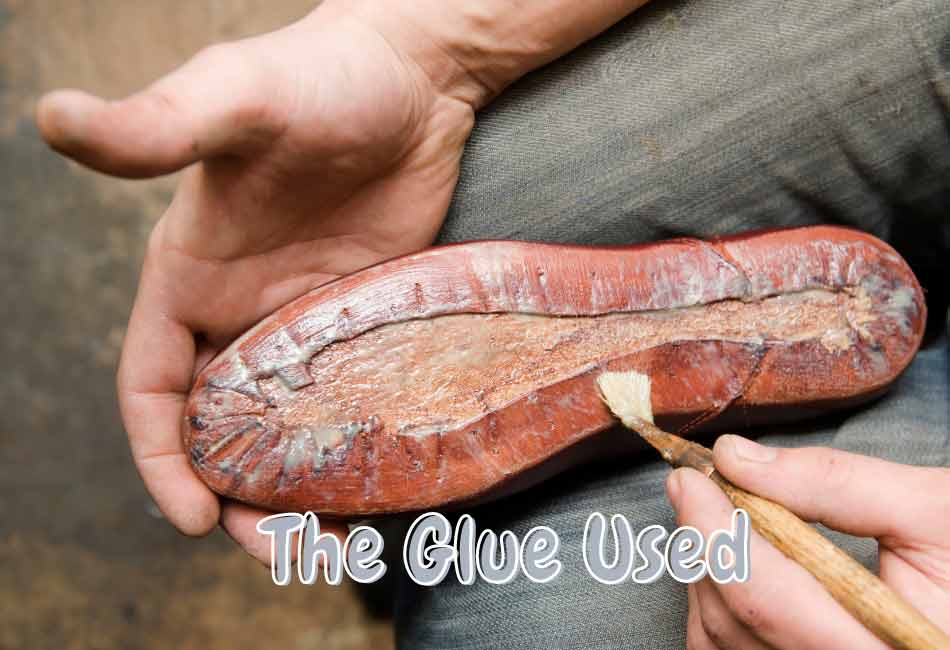
There are various types of glues that can be used to create faux leather items. While some adhesives are explicitly formulated for making faux leather goods, others are not, and using them may mean a whole lot of trouble, including a foul fish smell.

Let’s take a step back!

The fish smell may also be from the glue used during the manufacturing of the faux leather material itself.

The main ingredient in most glue products is usually PVA (polyvinyl acetate). During the faux leather-making process, it is used to bond other materials like polyester (and sometimes cotton) to other polyurethane-based components to make the faux leather material.

With all those chemicals combining and reacting, it is no surprise faux leather will have a smell that is not very pleasant.

5. The Protective Coating

Faux leather is often coated with a protective layer to prevent moisture damaging the material. The protective coating keeps water and moisture at bay but also gives the faux leather a distinctive sheen.

A lot of these coatings are petroleum or plastic-based, which can be one reason for the smell. The good news here, though, is it’s easy to remove this coating if you want to get rid of your fish smell problem.
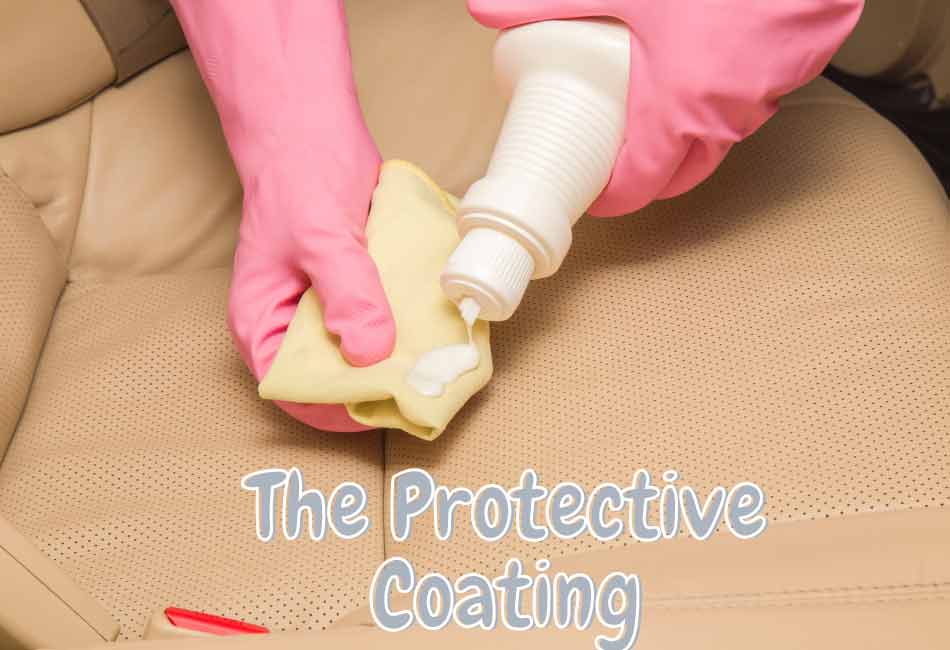
All you need to do is scrub the leather with baking soda and then use warm water and dish soap to clean the faux leather surface.

6. Long Periods During Storage

Another reason for the fish smell on your faux leather item could be the amount of time that has passed since the faux leather item was manufactured. Or the environment where the faux leather piece sat before being shipped to your location.

The more time passes, the less likely chemical agents will cause odor problems. If you have faux leather items that have sat in storage for a few years, the material may have absorbed odors. This can lead to these items smelling like fish.

This means you should always make sure there’s enough airflow around your faux leather items when it’s in storage, or else they might start giving off an unpleasant odor.

If this does happen, don’t worry; all you need to do is wipe down the surface with baking soda for 30 seconds before wiping it clean with warm water and dish soap! Your faux leather item won’t smell anymore within minutes after treating it.

7. Cheap Faux Leather Goods

Finally, the last potential cause of a fish smell from faux leather is that you may have purchased cheap faux leather goods.

Cheap materials are often made with lower-grade synthetic fabrics and adhesives that can easily break down when exposed to air or moisture.
This issue is compounded when these cheap items are stored for long periods of time. As the lower-grade materials degrade, they start giving off odors that smell like fish.

How To Remove Fish Smell From Faux Leather

There are several ways to know out those pesky smells from faux leather, and here are some of the most effective home remedies:

Step-by-step: How To Remove Fix Smell From Faux Leather

1. Using Mild Dish Soap

One of the first things to try is basic mild dish soap, and here’s how;

Step One: Make a mild dish soap solution

  • Mix 5-10 drops of mild dish soap with a gallon of warm water and stir the solution.

Step Two: Wipe down the faux leather item with the solution

  • Wet a cloth in the solution and wipe down your faux leather item with it.
  • Make sure to get every nook and cranny and pay extra attention to places where dirt may have accumulated.

Step Three: Rinse it off

  • Rinse the faux leather item with plain water and make sure to remove all the soap residue.

Step Four: Let it dry

  • Allow the faux leather item to air dry.
  • This should take about an hour or two, depending on how wet the faux leather was when you rinsed it off.

2. Using White Vinegar

White vinegar is also effective in removing fishy smells from faux leather, and here’s how;

Step One: Make a solution of white vinegar

  • Mix one part white vinegar with two parts warm water in a spray bottle and shake gently to ensure it’s well mixed.

Step Two: Spray the faux leather with the solution

  • Spray your faux leather generously with the mixture, making sure all areas are evenly covered.
  • Allow it to soak for 10-15 minutes before moving on to step three.

Step Three: Wipe dry

  • Using a dry cloth or paper towel, wipe off the excess moisture from your faux leather.
  • Make sure to remove all traces of moisture; otherwise, you could end up with watermarks on your faux leather.

Step Four: Air out and enjoy!

Once your faux leather is damp but not wet, leave it out to air dry.

3. Using Baking Soda

Baking soda is a great natural remedy for removing smells from faux and natural leather, and here’s how;

Step One: Sprinkle baking soda on the faux leather

  • Sprinkle baking soda liberally all over your faux leather item.

Step Two: Let it sit

  • Let it sit overnight to absorb the smells.

Step Three: Vacuum

  • Use a vacuum cleaner to remove excess baking soda from the faux leather item.

Step Four: Wipe down with warm water and soap

  • Wipe it down with a cloth soaked in warm water and mild dish soap.
  • Then rinse off and let it air dry.

Tips On Preventing Fish Smell From Faux Leather Items

  • Make sure there’s enough airflow around your belongings, or else they might start giving off an unpleasant odor in time.
  • You’ll want to make sure that you’re NOT storing your faux leather items in tight spaces for long periods, as this can lead them to absorb smells from other things like food or drinks without proper ventilation.
  • Usually, proper storage practices will work just fine to prevent any fish smell occurrence.
  • Avoid applying any cosmetics or perfumes to your faux leather item to prevent the smell from returning.
  • If you need a quick fix for the fishy odor, spray Febreeze on surfaces and wipe them off with dish soap!
  • If it’s a leather item and the smell is coming from inside, try wiping down the interior with an odor eliminator like vinegar or baking soda!
  • You can also rub talcum powder on the inside of your faux leather for extra protection against unpleasant smells in the future.
4 Easy Ways To Safely Remove Creases From Faux Leather

how to get creases out of faux leather

Like most materials, faux leather develops creases when it is not kept properly. But in most cases, creases on faux leather will appear naturally. In this article, I will show you the four best ways to remove those pesky wrinkles from your faux leather goods.

One of the best ways to remove creases from faux leather is by using an iron. All you do is set the iron to the lowest heat temperature and then place a piece of brown paper, towel, pillowcase, or t-shirt between the iron and the faux leather while you press.

Continue ironing until all of the creases are gone or until you’re satisfied with the results.

In the remaining parts of this article, I will delve into the details of the following;

  • Removing creases from faux leather using the ironing method.
  • I will also share with you three additional ways to remove creases from faux leather goods.

Keep reading this article to find out more!

How Does Faux Leather Get Creases?

To ensure that our conversation stays on-topic, I believe it is important to provide some insight on how creases develop in your faux leather items. This way, you have a firm foundation for the next part of our discussion.

So how does faux leather get creases?

1. Not Storing them Properly

Your faux leather items will get creases when you do not store them properly.

If you don’t take proper care of them, faux leather items—from shoes and jackets to dresses, pants, bags, or furniture—may develop creases that can be difficult to get rid of.

An easy way around shoes and boots, for example, is to get a shoe organizer like this one on Amazon.

To preserve the shape of faux leather jackets, it is essential to hang them on broad shoulder hangers that are specially made to keep jackets from creasing.

2. Faux Leather Items Bought And Shipped May Arrive Creased

When ordering faux leather goods online and having them shipped, there is a risk of the item arriving badly creased due to inevitable handling issues during transit.

An example is buying faux leather clothing.

Occurring all too often, one mistake many courier services tend to make when it comes to faux leather is mistakenly folding or box-packing the item that needs to be hung.

3. The Quality Of The Faux Leather

Low-quality faux leather items will also crease a lot easier. Oftentimes, this happens because of a thin coating or poor-quality fabric used underneath the material.

This begs the question, how do you know if a particular faux leather is low-quality when the material itself, “faux” leather, means fake or synthetic leather?

Without delving into too much detail, I will say that if the faux leather is from an obscure brand and its texture and flexibility are coarse or do not feel pleasant to touch, then it’s likely a low-quality product.

You May Also Like: Is Faux Leather Good Quality?

4. Frequent Use

Over time, items made from faux leather, such as jackets and couches, will start to show natural signs of wear and tear if they are used often.

The more frequently you use your faux leather items, the quicker the creases will appear and become permanent.

For example, faux leather shoes or boots that do not have anti-shoe creasers installed in them will also develop creases easily and very quickly.

It is also important to mention that other items, such as jackets and wallets, to mention a few, will still crease, even with very little use.

Later in this post, I will show you how to prevent your faux leather from creasing. 

5. Aging

As your faux leather items age, they can start to get creases and wrinkles.

This is because faux leather is made up of plastic materials that break down and becomes more flexible.

This can either be a sign that your faux leather needs to be replaced or that you need to take better care of it.

6. Manufacturing Defects: Creases In Molds or Forms

When faux leather items are made, it is sometimes put into a mold to take on the desired shape. If there are any creases in the mold, the final product will also have those creases.

While this might not be a big deal for some people, others might want a clean and pristine look. Unfortunately, this type of crease is usually very hard to remove, if not impossible.

How To Get Creases Out Of Faux Leather

There are a few ways you can successfully remove creases from faux leather, but the method you choose will depend on how wrinkled or creased your faux leather items are.

Because of this, I’m going to share various ways to do it.

Pro Tip: You would want to try the very easy and less involving methods before trying the very drastic and involving approaches.

Let’s jump into the meat of the content now!

1. Putting Weights On The Item

putting weights to remove creases from faux leather

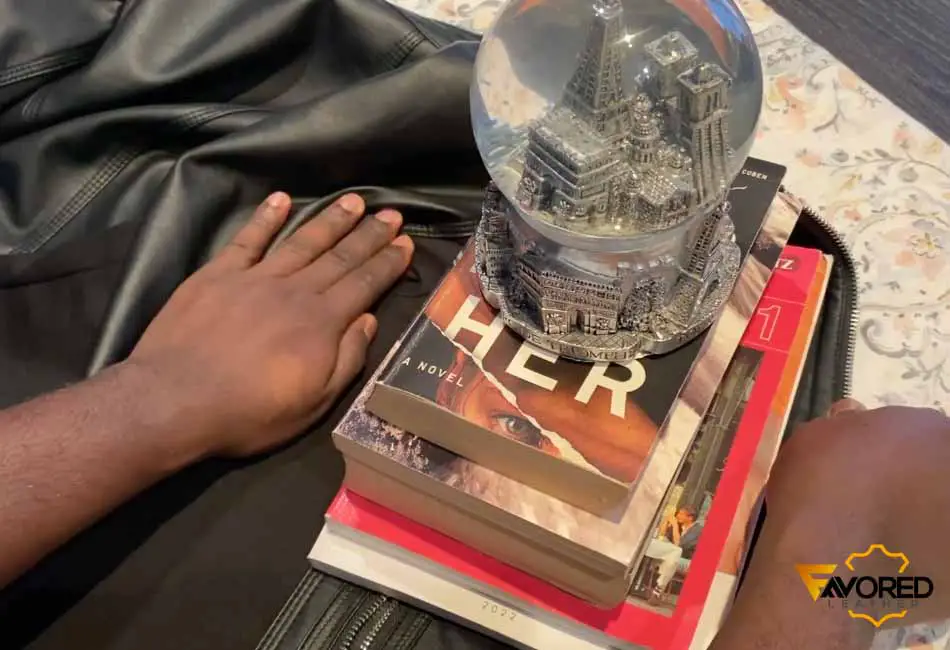
Putting weights on the faux leather item is one of the first methods you want to try when removing creases from faux leather goods. It will, however, require a substantial amount of time to do this.

This method will work if you have a faux leather jacket, skirt, pants, or any item you can lay flat.

Meaning things like shoes, boots, bags, and items that can lose shape are not good candidates for this method.

Things Needed:

  • Heavy books
  • Dry clean rag

Procedure:

Here’s how you remove creases from faux leather goods using some easily accessible weights around the house.

Step 1: Lay The Faux Leather Item Flat

  • Start by laying your faux leather jacket or pants flat on a smooth, clean table or floor.

Step 2: Place Heavy Books On The Faux Leather Item

  • Place heavy stacks of books or bricks on the item.
  • If you are using bricks, make sure to cover the side of the leather you’re going to be placing the weights with brown paper, cloth, or towel.
  • Also, you would want to ensure the weight you’re placing on the leather is smooth to avoid denting or causing other damage to the leather.

Step 3: Let It Sit Overnight

  • You would want to leave the weights on the faux leather item overnight.
  • The longer, the better!

Step 4: Inspect

  • The next day, you would want to inspect the faux leather to see if the creases are gone or improved.
  • You can leave the weights for as long as you would want or whenever the item is not in use.
  • Once you’re satisfied, remove the books or weights and wipe the surface of your faux leather item.
  • You can now use your faux leather item as you normally would.
  • Done!

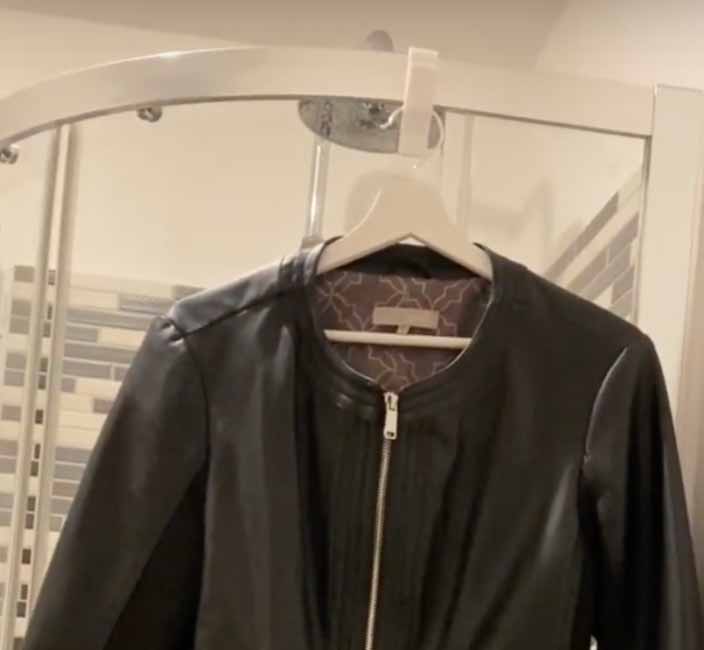
2. The Shower Steam Method

using shower steam to remove creases from faux leather

Depending on what faux leather item it is, you will be able to remove creases by using the steam from the bathroom when you shower.

You will be able to use this method to remove creases from your faux leather Jackets, hats, pants, and a few other faux leather items you can hang.

Here’s a step-by-step process for doing this without making the issue worse.

Things Needed:

  • Hanger
  • Microfiber cloth or rag

Procedure:

Step 1: Hang You Faux Leather Item

  • Put the faux leather item in the bathroom.
  • To ensure that the area remains dry, you should make certain that it is in a location where water cannot easily reach.
  • If it’s a jacket, pants, or skirt, you want to hang it on a wooden hanger and place it on the bathroom door or towel holder.
  • For faux leather pants or skirts, hang them straight from the waistband.

Step 2: Run The Shower, So It Gets Steamy

  • You can run the shower for a couple of minutes, so the steam gets the bathroom warm.
  • One thing I do is find a suitable place in my bathroom to hang my creased faux leather item and then take a hot bath. This way, I don’t waste water.
  • You can tell if the bathroom is warm enough when the bathroom glass window or doors fogs.
  • Or, if you have a way of checking the temperature in your bathroom, you would want to keep the water at around 105 F (40.5 C).

Step 3: Keep The Bathroom Door And Window Shut

  • Keeping the bathroom door and window shut allows the faux leather item to steam as long as possible.

Tip: Make sure not to turn on the ventilation fan to prevent the steam from escaping.

Step 4: Remove The Faux Leather Item

  • When the steam dissipates, it’s imperative to remove your article of clothing and smooth it out promptly.
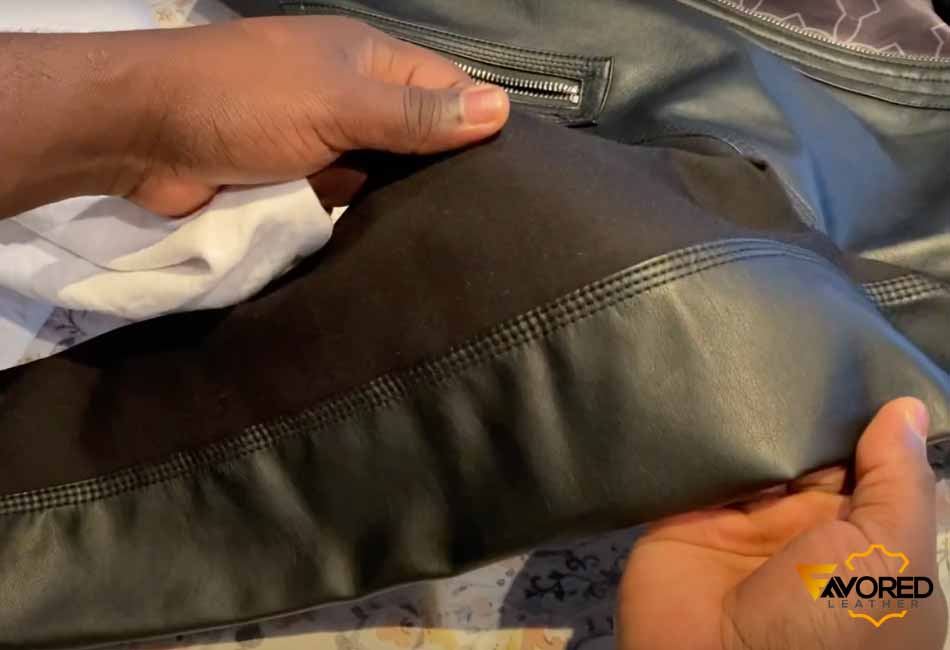
  • You can lay the steamed faux leather item on a flat and smooth surface and begin to pull out and smoothen the creases with your hand gently.
  • This method will work if there are only light creases on your faux leather items.

Step 5: Wipe The Faux Leather Surface

  • Once you’re done, wipe the faux leather surface with a clean, dry microfiber cloth or rag.
  • Then let it air-dry.
  • Finished!

3. The Dryer Method

The dryer method is another way to remove creases from your faux leather items.

Again, it’s a relatively easy method that will work exceptionally well. This method will be excellent if you have a dryer in your house.

Things Needed:

  • Dryer
  • Hanger
  • Brown paper

Procedure:

Step 1: Put The Faux Leather In The Dryer

  • Put your creased faux leather item in the dryer for about 45 seconds to a minute.
  • You wouldn’t want to exceed the 1-minute mark because this will overheat the faux leather item and cause it to melt or break down the adhesives used in the assembly of the item.

Step 2: Remove The Faux Leather Item From The Dryer

  • After the faux leather item has been in the dryer for up to a minute, take it out and check if the creases are beginning to fade out.
  • What you do next is to stuff or hang the faux leather item for a few seconds.
  • You can stuff them with some tissue paper, old socks, or anything that can fit in the shoes or boots for shoes.
  • And for jackets, pants, and other faux leather apparel, you can hang the item up and let it cool for a few seconds.
  • After the item has completely cooled, you can replace the item in the dryer, this time for a less amount of time (45 seconds or less).
  • You can repeat this process till you’re satisfied with how much improvement you see with the creases.

Step 3: Repeat Steps 1 & 2

  • After repeating this process about 2 or 3 times, you can finally leave the item hung or stuffed and allow the warmth to relax the faux leather item naturally.

Step 4: (Optional)

  • If you have stubborn creases going on and you find there are still some creases on the item, you can iron them.
  • You can wait about 2 hours after step 3 and iron out the remaining creases with a steam iron and a brown paper or towel.
  • You can go over the ironing method below for more details on ironing creases out of faux leather.
  • Voila!

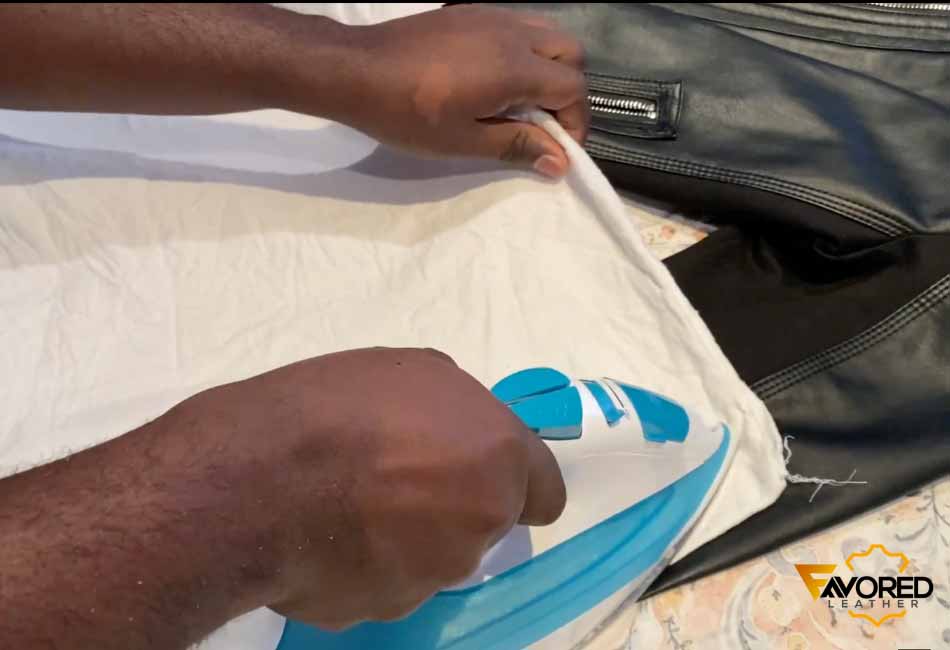
4. Ironing Method

using an iron to remove creases from faux leather

Last but not least is the ironing method. Ironing creases out of your faux leather items is the most popular way to remove creases from faux leather.

But at the same time, I can say it can be a little tricky to accomplish.

The best way to remove creases for most fabrics is by heat, but things can go well or wrong with faux leather.

This is because faux leather is a plastic material, and the heat from the iron can cause it to melt or warp. So this process has to be done well and carefully to succeed.

Procedure:

Step 1: Set Your Iron To The Lowest Heat Setting

  • Start by setting your iron to the lowest heat.
  • You will be able to set your iron to a medium or high heat level if your faux leather item does not have a fabric backing.
  • Also, there is a bit of a debate around the issue of steam ironing faux leather vs. dry heat ironing it.
  • But I found that while both will work fine, I prefer the dry heat method.

Step 2: Place Brown Paper On The Faux Leather

  • Put your faux leather item on an ironing board and lay a piece of brown paper, a t-shirt, towel, or a pillowcase.

Step 3: Iron The Faux Leather

  • Begin to press over the towel or brown paper you have placed between the iron and the faux leather item.
  • You would want to vary your ironing strokes and the pressure you put on the iron to remove the creases.
  • Iron in very brief intervals.
  • From time to time, lift the iron and the brown paper, towel, or t-shirt to see how much improvement you’re making.
  • This will also allow you to check and see how the faux leather reacts to the iron heat.
  • At this point, you will also be able to tell if the heat from your iron is just fine or if you need to increase or decrease it.
  • Another important thing you must remember is to allow the faux leather item to cool down in between every pressing.
  • Continue doing this until you’re satisfied with the results.
crease-free faux leather

How To Prevent Creases On Faux Leather

Although there are some instances in which you will not be able to prevent creases from the surface of your faux leather, there are other things you can do to minimize the chances of these creases appearing.

This will save you a tremendous amount of time in removing those creases.

1. Clean It Right

Cleaning your faux leather items the right way is an excellent way to prevent creases. You should never throw your faux leather goods in a washing machine if it has not been indicated on its care label.

You can clean your faux leather items by using a damp cloth to wipe the entire surface. You can use mild dish soap if you have stubborn stains, dirt, or grime on your faux leather item. You should never put your faux leather items in a washing machine.

2. Dry Right

You also want to dry the faux leather item with care. When it’s time to dry your faux leather item after cleaning it, you would like to ensure you hang the faux leather item if it’s a jacket, pants, skirt, or some other type of garment.

You can stuff them if necessary for shoes or boots, so they do not lose shape.

Most of the time, you will be air-drying your faux leather items. You would want to smooth them out with your hands before hanging or laying them to dry gradually.

You will also want to air-dry your faux leather items in a well-ventilated place where air freely circulates.

3. Store It Right

Last but not least is to store your faux leather goods properly. You do not want to toss your faux leather goods, such as garments, in a drawer or closet, as this can cause severe creases on your faux leather item.

You want to hang all faux leather garments with a suitable wooden hanger and ensure they do not touch or rub against other items you have hanged.

Also, you do not want to put your faux leather shoes in a pile on the floor. Instead, you would like to arrange them nicely, leaving an adequate space between them.

FAQs On How To Remove Creases From Faux Leather

Q: Will creases in faux leather cause it to crack?

A: Creases in faux leather can cause it to crack over time, so it’s best to remove them as soon as possible. If the cracks are already severe, you might need to replace the piece of furniture altogether.

Q: Can I use a hairdryer to remove creases from faux leather?

A: Yes, you can use a hairdryer to remove creases from faux leather. Set the hairdryer to the lowest setting and hold it about six inches away from the surface of the leather. Move the hairdryer back and forth over the creased area until the creases are gone.

Q: How do I remove creases from faux leather without damaging it?

A: The best way to remove creases from faux leather without damaging it is by using a steamer. Hold the steamer about six inches away from the surface of the leather and move it back and forth over the creased area. Alternatively, you can use a hairdryer on the lowest setting.

Hold it about six inches away from the surface of the leather and move it back and forth over the creased area. Whichever method you choose, be sure not to stay in one spot for too long, as this could cause damage to the leather.

Q: Can I use an iron to remove creases from faux leather?

A: Yes, you can use an iron to remove creases from faux leather. Set the iron to the lowest setting and hold it about six inches above the surface of the leather. Hold the iron there for about 30 seconds, then move it to another spot. Repeat this process until the creases are gone. Just be sure not to leave the iron in one place for too long, as this could cause damage to the leather.

Q: How do I remove creases from faux leather without a hairdryer?

A: If you don’t have a hairdryer, you can try using a steam iron. Set the iron to the lowest setting and hold it about six inches above the surface of the leather. Hold the iron there for about 30 seconds, then move it to another spot. Repeat this process until the creases are gone.

Q: What is the best way to prevent creases in faux leather?

A: The best way to prevent creases in faux leather is by storing it properly. Keep it in a cool, dry place out of direct sunlight when you’re not using it. If you’re holding it for an extended period, consider wrapping it in acid-free tissue paper.

Should You Focus on Custom Leather Goods, Stock Inventory, or Both?

Should You Focus on Custom Leather Goods, Stock Inventory, or Both?

You have spent countless hours refining your saddle stitching, burnishing every edge to perfection, and developing your signature leather finish.

Now, a big question looms: Should you offer custom leather goods, build stock inventory, or pursue a combination of both?

This decision is not just about product types. It will shape how you manage your time, attract clients, and grow your business long term.

This guide will help you explore the pros and cons of custom, stock, and hybrid models, allowing you to carve a path that reflects your values, goals, and skills.

What Are Custom Leather Goods?

Custom leather goods are made-to-order pieces tailored to a specific customer’s needs. These include personalized wallets, engraved belts, bespoke handbags, or even complex items like custom holsters.

Why Custom Work Appeals to Leather Crafters

  • Creative Freedom: Custom requests often challenge you creatively and allow you to stretch your capabilities.
  • Higher Profit Margins: Clients are willing to pay more for personalized, one-of-a-kind goods. According to The Really Useful Information Company (TRUiC), custom businesses can command premium prices due to their exclusivity and craftsmanship.
  • Customer Connection: Custom orders allow you to build relationships with your clients. Each interaction becomes an opportunity to tell your story and explain your process.

Common Challenges with Custom Orders

  • Time Management: Every new order often comes with a learning curve. From designing to communicating with clients, custom work can consume more hours than anticipated.
  • Difficult Expectations: If communication is not crystal clear, a customer may expect something different from what you deliver. Setting clear timelines and using visuals or sketches can help avoid misunderstandings.

When Custom Is the Right Choice

If you love storytelling through craftsmanship, and if every piece you make feels like an artistic statement, custom work might be your sweet spot.

This model works well for crafters selling luxury or niche products—think equestrian gear, historical reenactment accessories, or personalized journals.

What Is Stock Inventory?

Stock inventory refers to ready-made products that are available for immediate purchase. Think of cardholders in standard colors, pre-sized belts, or minimalist wallets with no personalization.

Advantages of Stock Products

  • Efficiency: Making multiple versions of the same item saves time. You can streamline processes like cutting, stitching, and finishing.
  • Scalability: Stock is easier to mass-produce and can grow with your business as demand increases.
  • Immediate Gratification for Customers: People love quick shipping. Ready-to-ship items meet that demand.

Potential Drawbacks

  • Inventory Risks: If a product does not sell, you may be left with unsold stock.
  • Less Personal Engagement: You may miss the one-on-one experience that comes with custom orders.
  • Upfront Investment: Building an inventory requires materials, space, and financial resources without guaranteed sales.

When Stock Makes Sense

If you sell at markets, run an e-commerce store, or want to maximize revenue with limited time, stock is an ideal foundation.

Products like coasters, keychains, and basic wallets are excellent for starting small and testing your audience’s interest.

Should You Do Both?

Many successful leather crafters strike a balance between custom and stock. This hybrid approach provides stability through stock items while allowing for creativity and premium pricing on custom work.

The Best of Both Worlds

  • Attract Two Types of Buyers: Quick buyers can grab ready-made items, while detail-oriented customers can commission personalized pieces.
  • Revenue Diversification: If one stream slows, the other can keep your business afloat.
  • Market Research: Custom orders often reveal trends. If multiple people ask for the same type of leather journal, you can add a simplified version to your stock line.

Balancing Strategies

  • Design Once, Sell Many: Turn your most requested custom orders into stock patterns.
  • Use Stock Sales to Fund Custom Tools: Profits from stock can help cover the cost of dies, stamps, or higher-grade leather used for custom pieces.
  • Schedule Wisely: Dedicate specific days to working on stock inventory and others for handling custom projects.

What to Consider When Making Your Decision

1. Your Strengths and Interests

Ask yourself where your strengths lie. Do you enjoy intricate design and personalization? Or do you prefer efficiency and repetition? There is no wrong answer—just an honest one.

2. Your Ideal Customer

Understanding your customer is key. If you are selling to gift buyers, they may want personalized items. If your audience values speed and convenience, they may prefer ready-made pieces. Explore resources for insight into buyer behavior in the leathercraft space.

3. Your Financial Situation

Stock inventory requires an upfront investment in materials and tools. If funds are limited, starting with custom orders can help you earn money as you go. Over time, you can reinvest profits into building stock.

4. Space and Storage

Custom orders typically require less storage. On the other hand, if you are creating stock items, you will need bins or shelves to store finished goods safely and organize them for easy access.

5. Seasonality and Events

Some leather businesses do well with stock around holidays or at events like craft fairs. During the off-season, custom orders can keep income flowing. Crafting a flexible schedule allows you to take advantage of both.

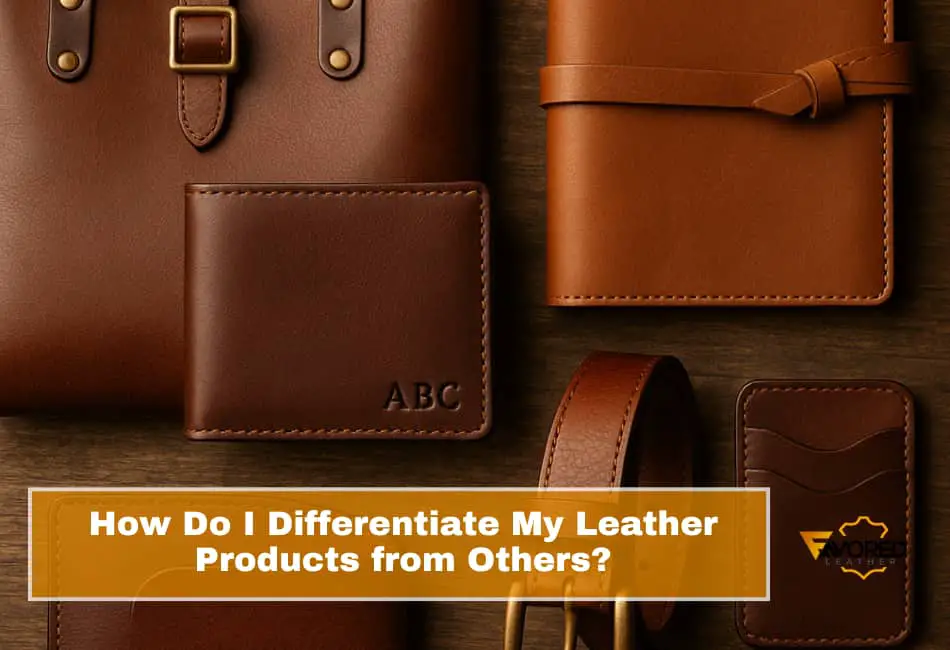
How Do I Differentiate My Leather Products from Others?

How Do I Differentiate My Leather Products from Others?

In a world where leather goods are widely available and mass-produced items flood online marketplaces, standing out as a leather crafter requires more than just good craftsmanship.

The key question is this: what makes your leather products unique beyond using high-quality materials?

Whether you are just starting or have years of experience behind you, identifying and communicating your unique value proposition will shape how customers see your brand.

In this guide, we will walk through the most effective ways to distinguish your leather products from the rest. We will discuss elements such as design philosophy, material choices, production methods, customer experience, storytelling, and visual branding.

By the end, you will have a roadmap to help you define what sets your work apart—and how to communicate it with confidence.

1. Go Beyond Quality Materials

Every leather business claims to use high-quality materials, but this alone is not enough to set you apart. Your competitors may also be using full-grain or vegetable-tanned leather. The question is: how do you elevate that?

Consider the example of Hemlock & Hide. Their differentiation is not just about quality leather; it is about the specific choices they make—vegetable-tanned leather, brass hardware, made in the USA, and a distinct design philosophy. These elements combine to create a brand identity that speaks directly to a particular audience.

Ask yourself:

  • Do I use materials that are rare or sustainably sourced?
  • Do I focus on vegetable-tanned leather for environmental reasons?
  • Do I incorporate hardware or finishing techniques not commonly seen?

If so, highlight those decisions as intentional. Explain why they matter. Customers love brands that make thoughtful, transparent choices.

2. Develop a Signature Design Style

Your design aesthetic is one of the most powerful ways to stand out. Whether you lean toward minimalism, rustic Western styles, or bold experimental forms, your product design becomes part of your identity.

A consistent design language builds recognition. Think of how certain brands are immediately identifiable by their stitching patterns, logo placements, or the way their wallets fold.

To develop a signature design style:

  • Review your best-selling or most complimented products.
  • Identify recurring features—curves, color choices, finishes.
  • Think about the kind of customer you want to serve. Are they adventurous, professional, rugged, elegant?

From there, refine your product line to reflect that vision. The more distinctive your style, the easier it will be for your audience to remember you.

3. Offer Personalized and Custom Experiences

Another way to set yourself apart is by offering a high-touch, personalized experience. This could mean allowing custom engravings, hand-tooling, monogramming, or even made-to-measure pieces.

For example, if a customer wants initials burned into a wallet or a special pocket for a tool, being able to say yes positions you above competitors who only sell stock designs.

Make personalization part of your brand story:

  • Show examples of past custom work on your website or social media.
  • Encourage customers to reach out with special requests.
  • Share the behind-the-scenes process of bringing a custom piece to life.

Custom work can be more time-consuming, but it also allows you to charge a premium while strengthening customer loyalty.

4. Tell the Story Behind Each Piece

One of the most human and emotionally powerful ways to differentiate your work is through storytelling. People connect with stories far more than with product specs.

Use your website, product descriptions, and social media to explain:

  • The inspiration behind a product
  • The materials and where they come from
  • The techniques you use and why they matter
  • The values that drive your brand

When a customer understands that your belt was inspired by a grandfather’s workshop or that your journal cover is made from locally sourced leather dyed with natural pigments, they are not just buying a product—they are investing in meaning.

5. Emphasize Craftsmanship and Process

Show your audience how much care and skill goes into your work. Many consumers are unfamiliar with what hand-stitching, burnishing, or edge painting actually involves. Educating them helps justify your pricing and highlights your expertise.

Ideas to showcase your craftsmanship:

  • Create short videos of your process
  • Post progress photos of a piece from start to finish
  • Explain why you use specific tools or techniques

These behind-the-scenes glimpses reinforce the idea that your products are not just “made,” but crafted. That distinction matters.

6. Align with a Strong Set of Values

Modern consumers are more value-driven than ever. They want to support brands that stand for something.

Are you committed to sustainability? Fair labor? Traditional methods? American-made products?

Make those values part of your brand identity. If you use only vegetable-tanned leather because of its low environmental impact, say so. If you partner with small-scale tanneries or suppliers, let that story be heard.

This alignment with values can attract customers who care deeply about the same things and are willing to pay more for products that reflect their principles.

7. Create a Distinct Visual Brand

Branding goes beyond logos and business cards. It includes your photography style, color palette, typography, packaging, and even how you write captions on social media.

Consistency across these elements creates a visual language that builds recognition and trust.

To sharpen your brand’s visual identity:

  • Use a consistent editing style on your photos
  • Choose 2-3 brand colors and use them in your packaging and website
  • Write product descriptions and social posts in a tone that reflects your brand (e.g., rugged and bold or refined and elegant)

Packaging is particularly important. When customers receive your product, the unboxing experience leaves a lasting impression. A simple handwritten note, a stamped box, or branded tissue paper can elevate your product instantly.

8. Build Relationships with Customers

What ultimately makes a leather business thrive is not just selling products—it is building relationships.

Customer service, responsiveness, after-sale care, and ongoing engagement are part of what differentiates a small leather business from a faceless corporation.

Make an effort to:

  • Follow up with customers post-purchase
  • Respond quickly and kindly to inquiries
  • Ask for feedback and feature it on your website
  • Reward repeat customers with loyalty discounts or early product access

These personal touches build word-of-mouth, which is still one of the most powerful marketing tools available.

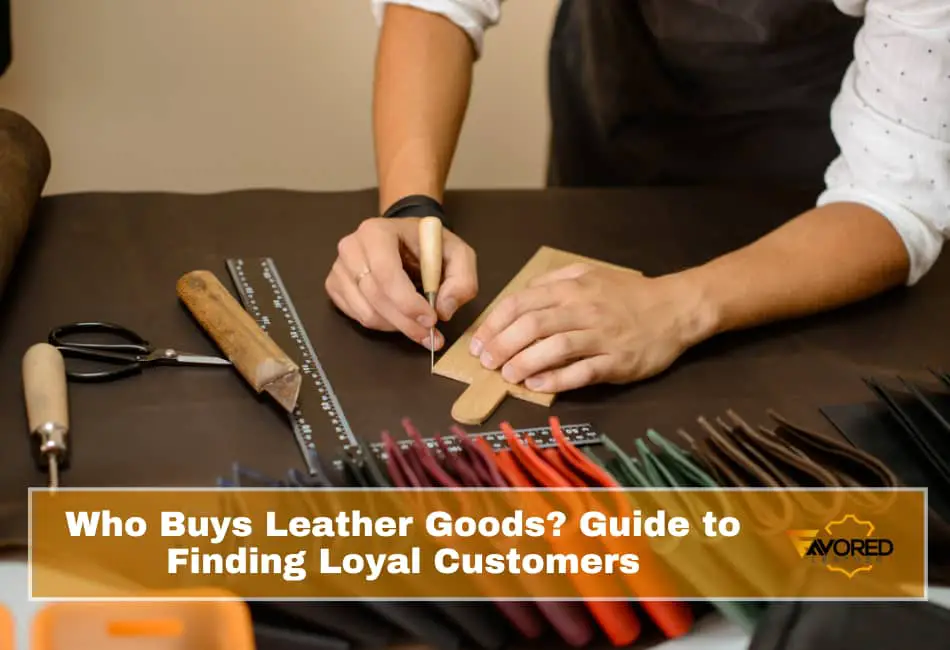
Who Buys Leather Goods? Guide to Finding Loyal Customers

Who Buys Leather Goods?

Have you ever poured your heart into crafting a beautiful leather piece, only to wonder who would truly appreciate it?

Or perhaps you have felt overwhelmed by the idea of marketing to “everyone,” only to see limited results? As a leather crafter, identifying your ideal client is not just a business strategy—it is a way to connect with those who value your artistry.

Knowing your ideal client allows you to focus your marketing, tailor your products, and ultimately increase your sales.

This guide will walk you through the steps of defining that perfect audience, ensuring your leather crafting business thrives by reaching the right people.

The Myth of “Anyone with Money”

Many leather crafters fall into the trap of believing that their ideal customer is simply anyone who can pay.

While this approach may seem practical at first, it often leads to scattered marketing efforts, inconsistent branding, and a disjointed product line.

Leather crafting is not fast fashion. It is not about mass production or shallow trends. It is about craftsmanship, intentionality, and passion.

Your ideal client is someone who sees beyond the surface—someone who values your work not only for its utility but also for its story.

Instead of targeting everyone, focus on a defined group of people whose interests align with what you create. Here are just a few examples of niche markets:

  • Rodeo competitors: Seek custom leather gear that can withstand extreme conditions.
  • Equestrian enthusiasts: Need dependable tack like saddles, bridles, or reins.
  • Welders and firefighters: Require heat-resistant gloves and aprons for safety.
  • Historical reenactors: Look for period-accurate leather pouches or belts.
  • Steampunk fans: Love intricate, themed leather accessories with a vintage touch.

By serving a specific audience, your work becomes more meaningful—and your brand, more memorable.

Steps to Identify Your Ideal Client

1. Analyze Your Existing Customers

If you already have customers, look at their patterns. Ask yourself:

  • What are their typical age ranges, professions, and locations?
  • What kinds of items are they drawn to most?
  • Are there repeat buyers? If so, what are they buying?

Perhaps your most loyal clients are outdoor enthusiasts looking for rugged utility wallets. Or maybe your handbags are popular among urban professionals seeking stylish, handmade alternatives to mainstream fashion.

2. Highlight the Unique Value of Your Products

Think deeply about what sets your leather goods apart. Are they entirely hand-stitched? Do you use rare hides? Is personalization a key part of your brand?

For instance, a custom leather journal might appeal to writers, while a hand-tooled sheath may be perfect for survivalists or hunters.

Understanding these differentiators helps you better match your products to the people who will appreciate them most.

3. Consider Function and Purpose

Are your items mainly functional, decorative, or sentimental?

  • Functional items: Tool rolls, work aprons, belts.
  • Decorative pieces: Wall art, embossed panels.
  • Gifts: Monogrammed wallets or custom keychains.

Recognizing the purpose of your goods can steer you toward the ideal clientele—whether it be tradesmen, collectors, or gift buyers.

4. Align with Client Values

Your ideal client shares your values. Consider:

  • Do they support sustainable or vegetable-tanned leather?
  • Are they looking for heirloom-quality craftsmanship?
  • Do they appreciate local or small-batch production?

These value-driven decisions can help you create products and messaging that feel authentic to your brand.

5. Map Demographics and Lifestyle

Go further by considering lifestyle traits:

  • Age: Younger buyers may be drawn to minimalism or trendy accessories, while older buyers may value heritage goods.
  • Gender: Are your designs more masculine, feminine, or gender-neutral?
  • Region: Leather gear needs vary by climate and culture.
  • Profession or hobby: Does your audience ride horses, weld, reenact history, or work outdoors?

These factors help paint a clear picture of the lives your leather pieces fit into.

Crafting a Buyer Persona

A buyer persona is a fictional, yet realistic, profile of your ideal client. Here is how you build one:

  1. Gather Data: Use customer feedback, purchase histories, and even social media interactions.
  2. Observe Trends: Stay updated on shifts in the leather industry. For example, demand for sustainable leather is growing (Future Market Insights).
  3. Compile the Persona: Combine insights to form a full character.

Example Persona: “Alex, the Equestrian Enthusiast”

  • Age: 30–45
  • Location: Suburban or rural
  • Interests: Horseback riding, country fairs, craftsmanship
  • Needs: Reliable leather tack, stylish utility belts
  • Values: Durability, local artisanship, tradition

With this persona in mind, you would focus on developing tough, polished leather goods, using visuals and messaging that reflect Alex’s lifestyle and values.

Validate Your Assumptions

Before you invest heavily in marketing or new product lines, validate your assumptions about your ideal client.

  • Talk to customers: Conduct surveys or initiate conversations at events or online.
  • Review your analytics: See what sells and to whom.
  • Test your assumptions: Launch a small batch product for a specific niche to gauge interest.

Events such as craft fairs or leatherworking expos are excellent opportunities to gather insights firsthand. Retailer Weaver Leather often encourages crafters to test and showcase products at local events.

Tailor Your Craft and Messaging

Refine Your Products

Design items that speak directly to your ideal clients’ needs. If your audience includes firefighters, emphasize safety and functionality in your design choices. If you cater to fashion-conscious consumers, focus on detail, finish, and customization.

Shape Your Story

Tell stories that draw clients into your process. Share why you chose a specific leather, how you developed a certain pattern, or what craftsmanship means to you.

For instance, explain how you sourced ethically tanned leather for a new product, and you will resonate deeply with sustainability-minded buyers.

Speak Their Language

Use language and tone that reflects your audience’s identity. For rodeo gear: “Built for the ring and the ride.” For reenactment accessories: “Crafted to bring the past to life.” This not only strengthens your brand voice but builds emotional connection.

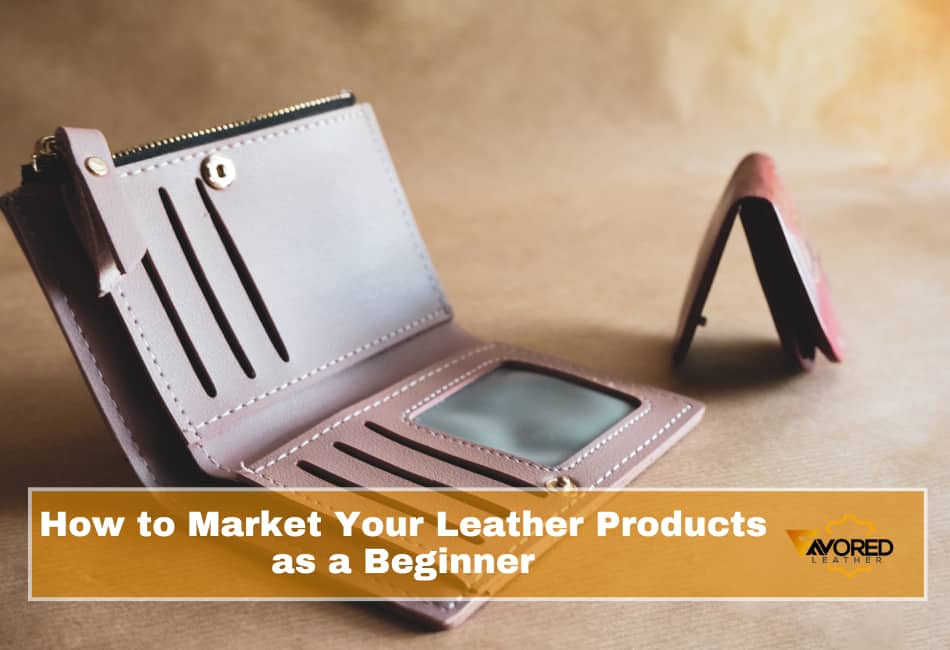
How to Market Your Leather Craft Products as a Beginner

How to Market Your Leather Products as a Beginner

You have just finished crafting a hand-stitched wallet, burnished every edge, and rubbed in the final layer of conditioner. It looks beautiful.

But now comes the part that many crafters dread—selling it. Who will buy it? How do you reach them? And how do you convince them that your work is worth their hard-earned money?

At Favored Leather, we understand that marketing can feel like a different world from crafting. But it does not need to be.

Marketing, especially when done from a place of authenticity, is simply about helping the right people find and connect with what you create.

This guide will walk you through beginner-friendly ways to market your leather products—without needing a big budget, complicated tools, or pushy sales tactics.

1. Let Transparency Be Your Superpower

In a world saturated with mass-produced goods and flashy advertisements, customers crave something real. One of the simplest ways to stand out as a beginner leather crafter is to be transparent—about your process, your materials, and your journey.

Why Transparency Works

Transparency builds trust. According to a 2019 report by Sprout Social, nearly 90 percent of consumers say that a brand’s transparency matters to them when deciding where to spend.

People want to know who is behind the product, what materials are being used, and why the business exists.

How to Be Transparent

  • Share your workspace—even if it is your kitchen table. Show your tools, your leather offcuts, and the mess in between.
  • Talk about the challenges of learning to stitch straight or finding the right thread weight.
  • Post updates about what you are working on, including the mistakes that helped you improve.

Transparency invites your audience to root for you. You are not just selling a wallet—you are telling a story.

2. Use Social Media as Your Digital Workshop Window

Social media is your best friend as a beginner marketer. Platforms like Instagram, Facebook, and TikTok allow you to showcase your products visually and connect with people who appreciate handmade work.

Start Simple and Stay Consistent

You do not need to post daily. Posting once or twice a week with quality content is better than posting frequently with little intention. Plan a mix of:

  • Finished product photos
  • Behind-the-scenes videos (cutting, burnishing, sewing)
  • Customer feedback or reviews
  • Educational content (how to care for leather, types of leather, etc.)
  • Personal stories about your journey

Engage, Do Not Just Post

Reply to comments, ask questions, and support other crafters. You are not just building a following—you are building relationships.

Use Hashtags Wisely

Start with a few broad hashtags (#leathercraft, #handmadeleather) and mix in niche-specific ones (#equestrianstyle, #steampunkaccessories) depending on your products. Tools like Hashtagify can help you find trending and relevant tags.

3. Capture Their Attention with Photography

The photos you use to present your products can make or break your first sale. You do not need a professional camera—your smartphone and a bit of effort are more than enough.

Tips for Effective Product Photos

  • Use natural light. Avoid using your flash. Morning or late afternoon light works best.
  • Keep the background clean. A piece of white poster board or a wooden table can work wonders.
  • Show multiple angles. Include close-ups of stitching, hardware, and interior compartments.
  • Use lifestyle shots. Show the wallet in someone’s hand or a belt paired with jeans. Help buyers visualize how they might use it.

For inspiration, browse successful Etsy shops or check the leather sections on marketplaces like Made Trade or Uncommon Goods.

4. Tell Your Story

Buyers do not just want to purchase a product—they want to connect with the story behind it. Why did you start leather crafting? What do you love about it? Who inspires you?

Your story is your brand. Whether you come from a line of craftspeople or just discovered leather last year, your unique experience matters.

How to Share Your Story

  • Create a short “About Me” section on your website or social media bio.
  • Write a longer version for blog posts or email newsletters.
  • Post a video explaining your process or motivation behind a specific product.

Your story creates emotional value. And emotional value builds loyalty.

5. Start Small, Think Local

While building your online presence, do not overlook your local community. Word of mouth and face-to-face interactions remain powerful marketing tools.

Ideas to Get Started Locally

  • Attend farmers’ markets or local craft fairs. Even one table can lead to valuable conversations and feedback.
  • Partner with a local store to sell a few items on consignment.
  • Give a free product to a local influencer or business owner who might spread the word.

Often, your first customers will be people within arm’s reach—friends, neighbors, or co-workers. Let them be your first ambassadors.

6. Build a Basic Website or Etsy Shop

Even if you mostly sell locally, having an online presence legitimizes your brand. If you do not have a website yet, consider starting with Etsy. It is beginner-friendly and already has traffic from people looking for handmade goods.

If you are ready for a website, platforms like Shopify or Squarespace make it easy to build a clean, professional store without coding. Be sure to include:

  • Clear product photos
  • Detailed descriptions (leather type, dimensions, features)
  • Pricing and shipping information
  • A way for customers to contact you

7. Gather and Display Social Proof

When buyers see that others trust and enjoy your work, they feel more confident making a purchase.

How to Build Social Proof

  • Ask your first few customers to send a photo of their purchase and permission to share it.
  • Display reviews or testimonials on your website and social media.
  • Repost Instagram stories or Facebook tags from happy customers.

These are not just nice-to-haves—they are trust builders.

8. Be Patient but Persistent

Marketing results do not happen overnight. There will be slow days. There might even be silent weeks. But consistency wins.

Every post, every comment reply, and every customer conversation lays the groundwork for something bigger. Stick with it.

Track Your Progress

  • Note how many people visit your website or engage with your posts.
  • Look at what kinds of content get the most responses.
  • Celebrate small milestones—your first post, your first follower, your first sale.

Does Leather Craft Products Define the Client, or the Client?

Does Leather Craft Products Define the Client, or the Client?

Should your leather craft business evolve from the products you feel most passionate about? Or should it begin by understanding a specific client and tailoring products to meet their needs?

This post explores both sides of this question—the product-driven and client-driven approaches—and offers a balanced perspective to help you define your path.

Whether you are new to the trade or looking to refine your business model, these insights will help ensure that your efforts are not only skilled, but sustainable.

The Product-First Approach

Many leather crafters begin their journey inspired by a love of the craft itself. Perhaps you have perfected a minimalist wallet design or built a signature look for your belts.

This is the product-driven path, where your skill and passion become the cornerstone of your business.

Why Choose a Product-Driven Model?

  • Your Craft is the Brand
    The product-first approach often results in standout branding. If you pour yourself into perfecting one or two products, your reputation builds around that specialty.
  • Creative Freedom
    You are free to experiment, develop your techniques, and push the limits of design. For instance, if you enjoy saddle stitching or intricate floral tooling, you are less constrained by outside demands.
  • Authenticity Attracts
    Clients who resonate with your style will seek you out. A distinctive aesthetic often appeals to those looking for quality and individuality.

The Risks of Leading with the Product

  • Unclear Market Demand
    What excites you may not always resonate with the buying public. A beautifully crafted item might sit unsold if it solves no real need.
  • Difficult Marketing
    If you are unclear on who your audience is, your marketing will lack focus. A great product still needs to be found by the right buyer.
  • Limited Scalability
    Custom work that evolves purely from your creativity may be hard to scale if not aligned with broader market trends.

Example: A crafter who specializes in medieval-style leather pouches may love historical design but must invest in identifying reenactment groups or Renaissance fairs as their ideal audience.

The Client-First Approach

Alternatively, many successful leather businesses begin by identifying a gap in the market and developing products to fill it. This is a client-driven strategy. It is less about what you love making and more about who you are making it for.

Why Choose a Client-Driven Model?

  • Market Demand Equals Sales
    By understanding your customer—be it a welder needing heat-resistant gloves or an equestrian competitor seeking high-end tack—you eliminate guesswork and cater directly to a need.
  • Faster Validation
    It is easier to test if a product will sell when you know the specific group it serves. Social media groups, trade forums, and client surveys can offer valuable validation.
  • Brand Loyalty
    When clients feel heard, they return. Fulfilling their specific preferences fosters trust and long-term customer relationships.

What You May Sacrifice

  • Creative Limits
    The client-focused route may steer you toward function over form. If your heart lies in artistic expression, some client-driven work might feel restrictive.
  • Trend Vulnerability
    Client demands can change with trends or seasons, requiring you to pivot quickly—sometimes with financial consequences.
  • Higher Research Load
    You must consistently study the preferences, pain points, and spending habits of your chosen niche.

Example: A leather business targeting firefighters could specialize in protective gear, holsters, or durable belts, aligning product features with client safety concerns.

The Balanced Approach

In practice, the best leather businesses find synergy between product and client. You can start by making what you love, listen to who buys it, and then refine your offering accordingly.

Signs You Are Ready to Balance Both

  • You have a few products that sell consistently.
  • You are receiving repeat orders with slight customizations.
  • You get frequent feedback from customers asking for similar variations.
StrategyApplication
Track Sales TrendsUse spreadsheets or inventory tools to note which products sell best and who is buying them.
Engage in ConversationsTalk to your buyers at craft fairs or on platforms like Instagram. Ask what they love—or wish you offered.
Prototype in Small BatchesRather than over-committing, test demand through pre-sales or limited runs.
Create Modular ProductsFor example, design a base wallet that can be personalized with various thread colors, initials, or pockets.

Balanced businesses often grow organically. What begins as a personal product can become a bestseller—refined by client insight without compromising your passion.

Conclusion

In the end, your leather crafting business does not have to choose between passion and practicality. The most successful artisans start by doing what they love, stay tuned to the market, and let customer feedback guide their evolution.

Whether the product shapes the client or the client shapes the product, what matters most is that you stay committed to learning, adapting, and honoring your craft.

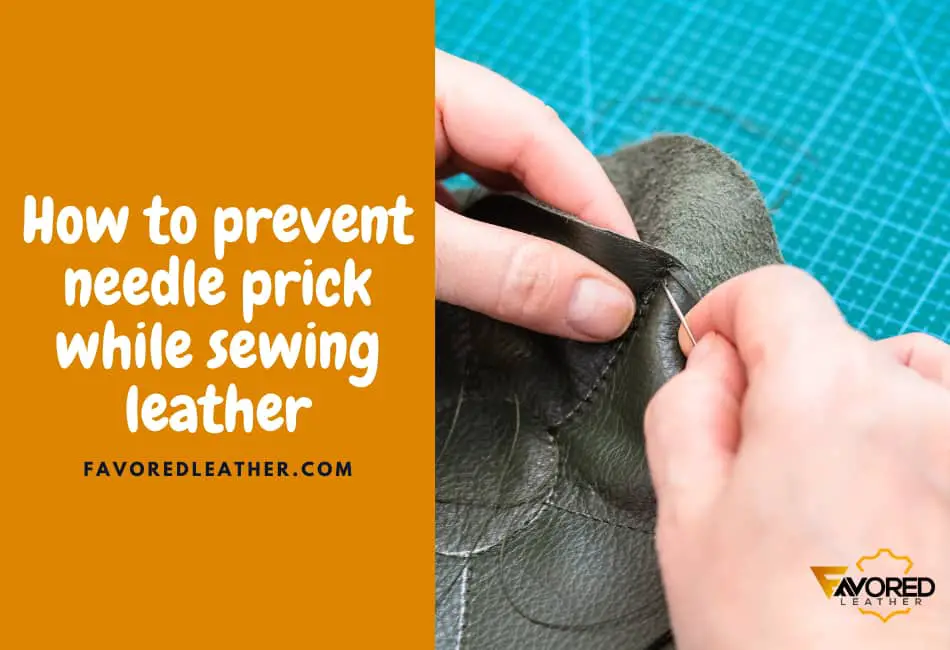
8 Tips for Avoiding Needle Pokes when Hand-sewing Leather

prevent needle pokes when hand-sewing leather in leather craft

If you’re getting into leather crafting, you’ll quickly find that hand stitching is a key part of the process. However, one common challenge that many crafters face is accidentally getting poked by needles.

It’s an issue that can be both frustrating and painful. To help you avoid this, I’ve put together some practical tips that can make your stitching safer and more enjoyable.

1. Dull the Needle Slightly

One of the first things I found helpful was dulling the needle just a bit. I know it sounds counterintuitive, but by taking a fine piece of sandpaper and lightly rubbing the tip, I’ve reduced the number of accidental pokes.

The needle still goes through the leather smoothly, but it’s less likely to pierce my skin. It’s a simple tweak, but it’s made a big difference in my crafting experience.

2. Select the Right Type of Needle

Another important tip is choosing the right type of needle for your project. In leather hand sewing, you usually pre-punch the holes before stitching, so the needle doesn’t need to be overly sharp.

That’s why I prefer using needles with a more rounded tip, often called blunt or ballpoint needles. These needles are designed to glide through the pre-made holes without piercing the leather further or poking your fingers.

By selecting a needle with a rounded tip, you can reduce the risk of accidental pokes and make your stitching process much smoother.

3. Ensure Good Lighting

Good lighting is another essential factor that can make a big difference in your leather crafting experience.

I’ve found that having bright, focused light on my work area helps me see exactly where the needle is going, reducing the chances of poking myself.

Whether you’re working during the day or at night, make sure your workspace is well-lit. A desk lamp with an adjustable arm works great because you can direct the light right where you need it.

With better visibility, you’ll have more control over your stitching and fewer mishaps along the way.

4. Maintain Good Sitting Posture

Maintaining good sitting posture is something I quickly learned to prioritize during long crafting sessions.

When you’re sitting comfortably with proper posture, you have better control over your tools, which can help prevent accidents like needle pokes.

I make sure to sit with my back straight and my work at a comfortable height, which reduces strain and helps me stay focused.

If you’re hunched over or sitting awkwardly, it’s easy to lose precision and end up poking yourself. So, take a moment to adjust your seating and workspace—it’ll make your crafting safer and more enjoyable.

5. Avoid Sewing When Tired

One of the most important lessons I’ve learned is to avoid sewing when I’m tired. Fatigue can seriously affect your concentration and precision, making it more likely that you’ll slip up and poke yourself with a needle.

I’ve found that when I’m well-rested and alert, my stitching is much more accurate and smooth. So, if you’re feeling worn out, it’s better to take a break and come back to your project later.

By sewing when you’re refreshed, you’ll not only avoid accidents but also produce higher-quality work.

6. Use a Stitching Pony

Using a stitching pony has been a game-changer for me in leather crafting. This handy tool holds your leather securely in place while you sew, freeing up both hands to focus on stitching without the worry of accidentally poking yourself.

With the leather firmly clamped, I can concentrate on making precise stitches, and it’s much easier to keep my fingers out of harm’s way.

If you haven’t tried a stitching pony yet, I highly recommend it—it makes the whole process more controlled and safer.

7. Use a Thimble or Finger Guards

Another simple but effective way to protect yourself from needle pokes is by using a thimble or finger guards.

These protective tools act as a barrier between your fingers and the needle, giving you the confidence to push through tougher areas without worrying about getting hurt.

I usually wear a thimble on the finger I use to push the needle and finger guards on any fingers that are likely to be in the needle’s path.

It might take a little getting used to, but once you do, you’ll find it makes hand stitching much safer and more comfortable.

8. Slow Down

Sometimes, the best way to avoid needle pokes is simply to slow down. It’s easy to rush through stitching, especially when you’re eager to finish a project, but hurrying often leads to mistakes.

I’ve learned that by taking my time and focusing on each stitch, I have better control over the needle and can avoid accidents.

Slowing down also helps me enjoy the process more, turning what could be a frustrating task into a relaxing one.

So, give yourself the time you need to work carefully and deliberately—it’ll make your stitching safer and your results more precise.